Police Commissioner Elow Warns of High Stakes for Cambridge Police Responding to Immigration Enforcement
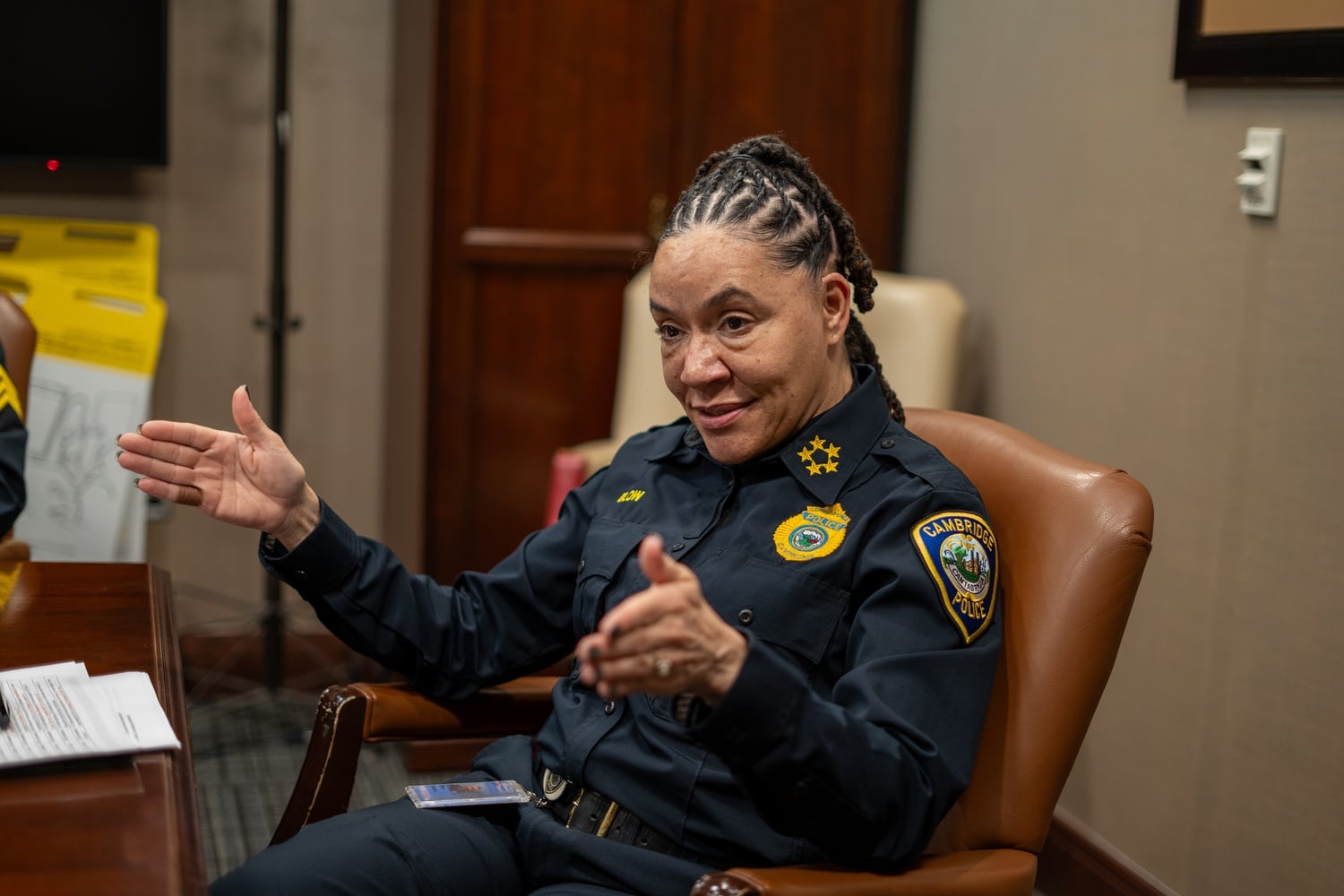
The Cambridge Police Department is navigating “uncharted territory” after a new executive order directed officers to respond to reports of federal immigration enforcement in the city, according to Police Commissioner Christine A. Elow.
The order, signed earlier this month by City Manager Yi-An Huang ’05, was issued weeks after federal immigration agents in Minneapolis fatally shot two American citizens during enforcement operations that sparked nationwide protests and clashes between civilians and law enforcement.
Under the directive, police must document all reported immigration activity and intervene in cases of “unnecessary or unreasonable force” — a requirement officers fear could expose them to criminal charges for obstructing federal law enforcement, Elow said in a Thursday interview.
“This is about as tense as it’s been in my 31 years of policing. I never thought I’d see something like this. I am concerned. I’m worried about our officers. We’ve been doing a lot of preparing,” Elow said.
Despite her concerns, Elow said police will comply with the order, at least to document interactions with federal agents.
“Number one, our community expects us to be there, so we’re going to be there,” she said.
“We cannot be in a situation where we’re in an armed conflict with another law enforcement agency,” Elow added. “They have their federal mandate. Whether the community agrees with it or not, they have to do that.”
Get The Crimson in your inbox.
Providing “very specific direction” to officers responding to enforcement operations is critical to avoid direct conflict, and legal trouble, with federal officers, Elow argued. Interfering with federal law enforcement can can carry a $250,000 fine and up to 20 years in prison.
“The stakes are really high for our officers if and when they respond to an enforcement action involving the federal government,” Elow said.
To prepare, CPD has begun scenario-based training exercises, coordinated with other sanctuary cities to monitor immigration enforcement, and ensured that CPD leadership is notified of all communication with federal agents.
Cambridge has seen relatively limited federal immigration enforcement compared with some surrounding cities; since January 2025, the department has logged 16 interactions with immigration authorities, including seven inquiries about individuals in custody, three requests for information, and one arrest.
In addition to the executive order, the City Council asked Huang to assess the feasibility of barring any sworn federal immigration agent from being employed by the Cambridge Police Department.
Elow said it is uncommon for federal officers to transition into local law enforcement and that she does not know of anyone in the department who previously worked for a federal agency.
“Either you are local police, or you’re federal police. It’s such a different apples and oranges as far as law enforcement goes,” Elow said.
—Staff writer Shawn A. Boehmer can be reached at [email protected] and on Signal at shawnb.18. Follow him on X @ShawnBoehmer.
—Staff writer Claire A. Michal can be reached at [email protected] and on Signal at ClaireMichal.154.
Want to keep up with breaking news? Subscribe to our email newsletter
Have a tip for The Crimson? Share it confidentially